We recommend an architecture that pairs an orchestration layer with a tokenized payment flow and a webhook-driven subscription lifecycle, and we recommend starting with a scoped prototype rather than a full build. This keeps card data out of your infrastructure, gives you one source of truth for subscription state, and lets you validate reconciliation logic before committing to a full rollout.
TL;DR:
- Using an orchestration layer helps manage changes in pricing models, currencies, and processors, enabling easier updates and multi-processor support.
- Implementing token vaulting and hosted fields significantly reduces PCI scope by avoiding storing raw card data on your infrastructure.
- Running webhook replay and signature verification tests in a sandbox prior to production deployment prevents reconciliation failures and security breaches.
- Choosing between API-first, hosted checkout, or third-party flows depends on your control needs, integration complexity, and existing payment infrastructure.
- Outsourcing subscription billing is advisable for operational layers, especially if reconciliation and compliance challenges outweigh internal engineering capacity.
Recommended architecture and core components
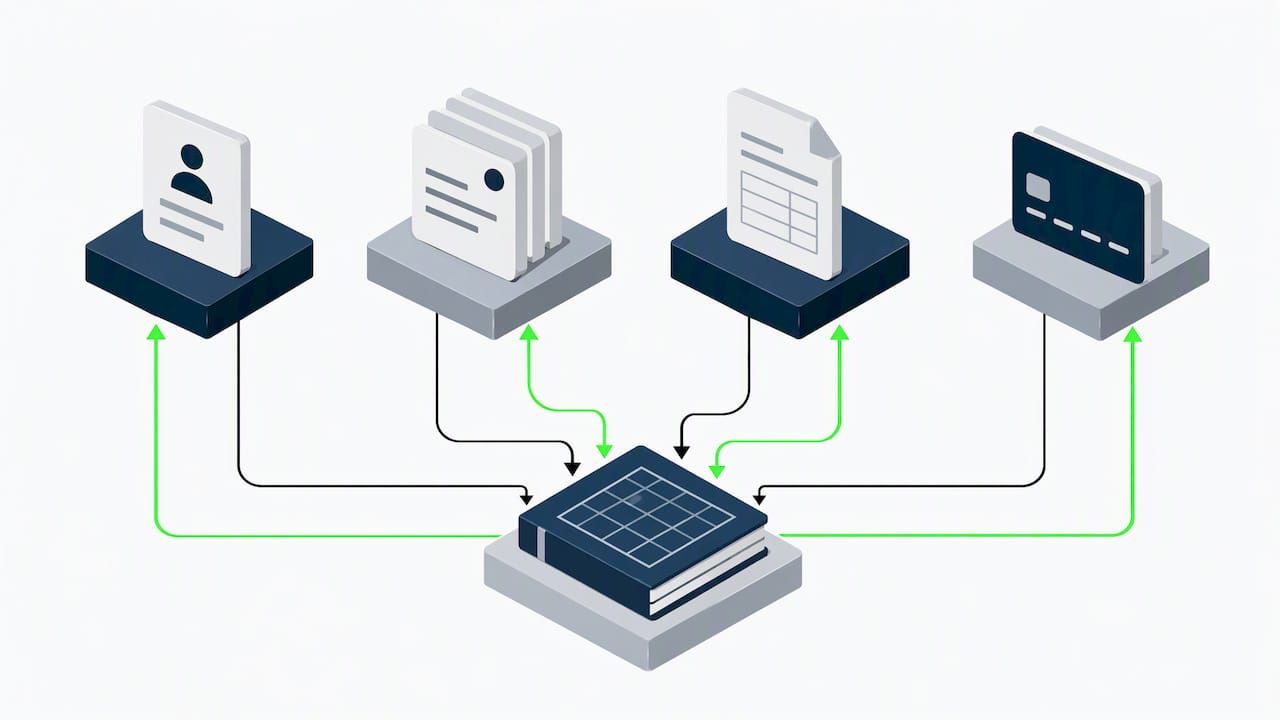
A subscription billing system is really a set of coordinated layers, not one tool, as explained in this best billing and invoicing software overview. We think in terms of seven components: an orchestration or billing layer that owns product, price, and subscription logic; a payment processor that handles authorization and capture; a token vault that stores payment credentials outside your servers; a customer portal for self-service plan changes; an accounting or ERP connector that syncs invoices and payments to your general ledger; a reporting store for revenue and churn analysis; and a webhook bridge that translates processor events into internal state changes.
The orchestration layer matters most because it decouples your business logic from any single processor’s API. When pricing models, currencies, or processors change, you update one layer instead of rewriting integrations scattered across your codebase. This also sets up multi-processor support later, which is relevant for companies expanding into new markets or hedging against processor outages.
In practice, this architecture produces four durable artifacts: customer IDs, subscription objects, invoice records, and payment records. Each one needs a clear owner and a clear reconciliation path back to accounting. Teams that skip this mapping exercise tend to discover gaps only after a customer disputes a charge or an auditor asks where a payment record lives.
Common integration patterns and where to use them
Three patterns cover most subscription billing projects, and each fits a different risk and complexity profile.
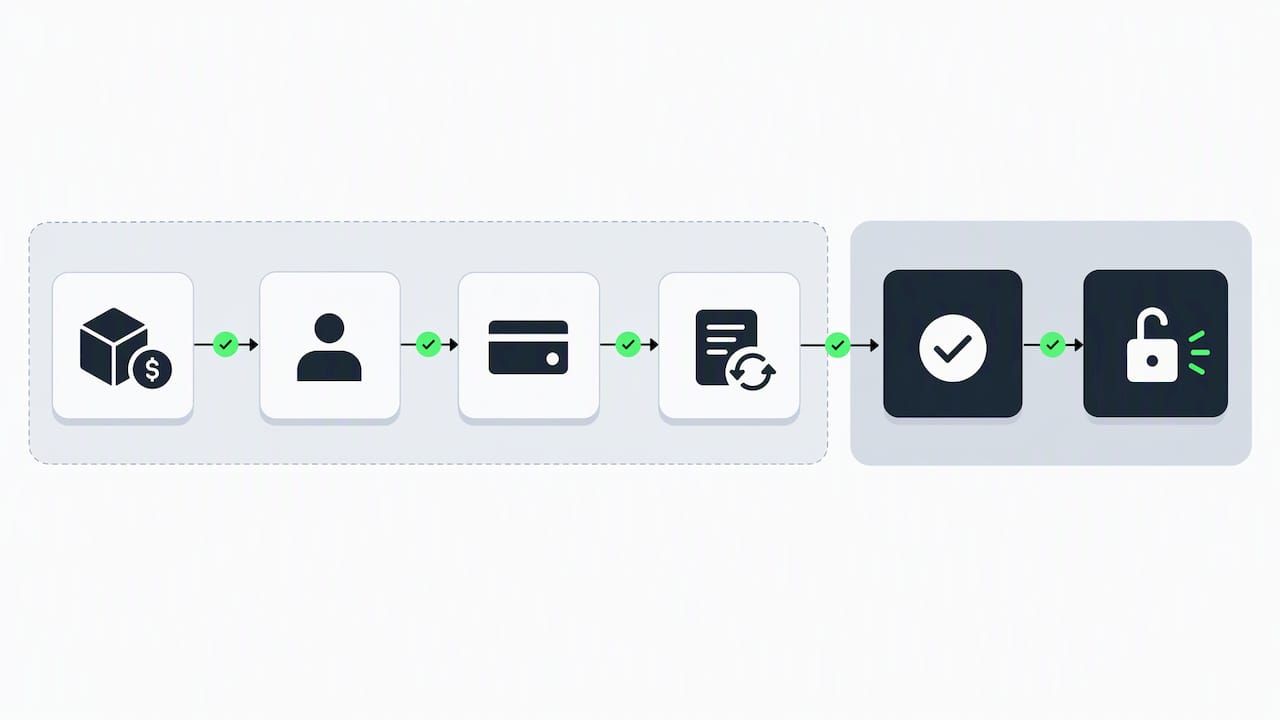
API-first integration gives you full control over checkout, upgrades, and complex billing models like usage-based tiers or marketplace splits. Build a subscriptions integration by creating product and price objects, creating customer records, collecting payment information, creating the subscription, and confirming payment before granting access. This pattern demands ongoing maintenance as processor APIs evolve, so budget for ownership, not just launch.
Hosted checkout or payment elements is the fastest path to a working integration and carries the smallest PCI footprint because card fields never touch your servers. The tradeoff is less direct control over recurring flows, which can matter if your pricing involves proration edge cases or multi-party payouts.
Off-processor or third-party processor flows come up when a company already has payment infrastructure in place and wants to layer subscription logic on top. Using third-party payment processors with billing requires you to report external payments as payment records and handle webhook-driven lifecycle updates, with reporting deadlines that affect when a subscription moves from incomplete to active. Miss that window and customers end up in a pending state despite having paid.
Implementation checklist: step-by-step engineering tasks and data flows
A subscription billing integration moves through a predictable sequence, and most failures trace back to a skipped or reordered step.
- Create a product and price model in the billing system, then map those IDs to accounting or ERP SKUs.
- Create customer records and collect payment methods through hosted fields or payment elements, storing only tokens or vault references.
- Create subscriptions with a conservative payment behavior setting so access is not granted on an incomplete or failed payment.
- Build idempotent webhook handlers for invoice and payment lifecycle events, including retries and duplicate delivery.
- Record off-processor payments as payment records and reconcile invoices within the window your billing system requires.
- Implement proration, refunds, and dunning flows, then add audit logs and scheduled reconciliation jobs.
A few supporting tasks round this out:
- Map every invoice state (draft, open, paid, void, uncollectible) to an internal status your support team can read.
- Log every webhook payload before processing it, so you can replay events after a bug fix.
- Build a reconciliation job that flags invoices without a matching payment record after 24 hours.
Pro Tip: Run webhook replay and signature verification tests in a sandbox before your first production customer, since Stripe’s subscription build guide treats this as a prerequisite, not an optional step.
Security and compliance: how to minimize PCI scope and secure billing
Billing design is security design. The moment raw card numbers pass through your own servers, you inherit a PCI scope that most engineering teams are not equipped to carry, and the fix is architectural rather than procedural.
According to guidance on payment card industry data security, provider-side vaulting, hosted fields, and tokenization are the highest-leverage methods for shrinking PCI scope while preserving a usable checkout experience. Concrete controls worth building in from day one:
- Use the processor’s token vault instead of storing any card data yourself.
- Render payment collection through hosted fields or embedded elements, never raw form inputs.
- Encrypt all transport and scope API keys to the minimum permissions each service needs.
- Restrict webhook endpoints to signed, verified payloads only.
Token-only billing design is the single most effective way to shrink your PCI footprint without sacrificing recurring billing flexibility, according to PCI security guidance. This shift also changes your webhook payloads and reconciliation logic, since you are now matching token references and processor IDs rather than card metadata. Our PCI DSS scoping checklist for engineers walks through the automation steps in more detail.
Testing, monitoring, and common billing bugs to avoid
The most expensive subscription billing bug is granting access before a payment actually clears. Guidance on pending updates and payment behavior recommends setting subscription creation and update behavior to reject or mark incomplete until a payment record confirms success, since a common implementation error applies upgrades before confirming payment.
Testing should cover three layers:
- End-to-end sandbox runs that simulate the full subscription lifecycle, including failed and retried payments.
- Webhook replay and signature verification tests to confirm handlers tolerate duplicate or out-of-order delivery.
- Reconciliation smoke tests that compare invoice totals against payment records after every deploy.
Once live, track failed payment rate, invoice-to-payment latency, retry success rate, and any alert for revenue leakage, and keep a recovery playbook ready for when reconciliation jobs flag a mismatch.
How to choose the right approach or partner
The right approach depends on five axes: time to market, internal engineering capacity, compliance requirements, multi-currency or multi-market complexity, and how deeply you need to sync with ERP or PSA systems.
Teams with limited bandwidth, complex reconciliation needs, contractual SLAs, or integrations spanning many enterprise systems tend to get more value from bringing in an implementation partner than from building everything internally. Before engaging one, we suggest asking:
- Can they show audit logs and reconciliation evidence from a comparable project?
- What is their delivery cadence, and how do they handle mid-project scope changes?
- Do they support self-hosted or client-controlled deployment if compliance requires it?
Bitecode’s perspective: trade-offs and when you should engage expert help
When billing is your product, meaning usage-based pricing or marketplace splits are core to your business, we think it deserves in-house ownership. When it is an operational integration layered on top of a core product, outsourcing it often frees engineering time for the work that differentiates you.
Hosted checkout trades control for speed, and an orchestration layer trades simplicity for an extra system to manage. Repeated reconciliation failures, complex usage-based billing, or mounting audit pressure are the clearest signals that it is time to bring in outside expertise.
— Bitecode
How Bitecode can help implement subscription billing integrations
We build subscription billing integrations on a modular pre-built baseline, which means a portion of the orchestration layer, token-handling patterns, and reconciliation logic is already assembled rather than written from scratch. Our Financial Module covers accounting, audit trails, and subscription logic, and we support self-hosted deployment where compliance teams require it.
If you are weighing a pilot before a full commitment, we scope integration sprints around the checklist above:
- A scoping call to map your current billing gaps against the architecture in this guide.
- A pilot sprint covering one processor, one reconciliation path, and a working webhook bridge.
- A full integration engagement for multi-processor or ERP-heavy environments.
Start with a custom business software scoping conversation and we will tell you honestly whether a pilot or a full build fits your timeline.
FAQ
How does subscription billing work?
Subscription billing works by creating a customer record, a product and price model, and a recurring schedule that generates invoices automatically at each billing interval. Payments are collected through tokenized methods, and webhook events update the subscription’s state as invoices are paid, retried, or canceled.
What is the best subscription billing platform?
There is no single best platform. The right choice depends on your billing complexity, existing processor relationships, and whether you need an orchestration layer, with API-first platforms suiting complex models and hosted checkout suiting faster, lower-scope launches.
Which payment gateway is best for subscriptions?
The best gateway depends on your market, currency needs, and whether you require off-processor flexibility. Many subscription-heavy businesses layer a dedicated billing orchestration layer on top of their chosen gateway so they are not locked into one processor’s recurring billing logic.
How does SaaS billing work?
SaaS billing typically combines a subscription plan, usage metering where relevant, and automated invoice generation tied to a payment method on file. Our overview of SaaS business models breaks down how pricing structures affect this flow.
What causes most subscription billing bugs?
Most subscription billing bugs come from granting access before a payment is confirmed, or from webhook handlers that process duplicate events inconsistently. Conservative payment behavior settings and idempotent webhook handling address the bulk of these failures.