TL;DR:
- Most Netguru alternatives in the US excel in specialized service areas like AI, CRM, or enterprise software. Choosing the right partner depends on project scope, industry requirements, and desired speed, with contract flexibility and compliance credentials being key factors. Bitecode offers a faster, modular path to custom enterprise systems by providing extensively pre-built components for rapid deployment.
What are the top Netguru alternatives in the US market?
The strongest Netguru alternatives available to US teams in 2026 span a wide range of service models, from full-cycle digital consultancies to niche CRM specialists and AI-first boutiques. Buyers typically explore these options because of pricing differences, timezone preferences, or the need for deeper specialization than a generalist European agency provides.
Here is a curated shortlist of firms worth evaluating:
- Cleveroad — ISO-certified, full-cycle engineering with regulated-industry experience; strong fit for healthcare and fintech
- Postlight — End-to-end digital product consulting with deep UX and product management capabilities
- STX Next — Large Python engineering teams suited to startups and enterprises needing engineering scale
- Yalantis — Product design and development with strong UX/UI depth for both startups and enterprises
- Appinventiv — Mobile-first product engineering for companies building consumer or enterprise apps
- Intellectsoft — Broad enterprise IT portfolio with global delivery and managed services
- Codal — UX-centric digital product agency focused on agile delivery and product innovation
- TechMagic — Rapid MVP delivery and dedicated team staffing for early-stage startups
- Technology Rivers — Custom software with AI and blockchain integration for companies adopting new tech stacks
- SmartSites — Web development combined with SEO and performance marketing for growth-focused businesses
- Techlogix — Cloud modernization and enterprise analytics for digital transformation programs
- Rolustech — Salesforce and SugarCRM specialists for CRM-heavy workflow automation needs
Each of these firms serves the US market and accepts projects remotely. The right shortlist depends on whether your priority is engineering depth, marketing integration, CRM implementation, or speed to MVP.
Detailed profiles of the leading Netguru alternatives
Netguru alternatives vary widely in pricing, service scope, regional presence, and client portfolio size, which makes criteria-driven comparison essential rather than optional.
| Provider | Best For | Key Services | US Availability | Rating |
|---|---|---|---|---|
| The Free Website Guys | Small business website launches | WordPress, website optimization | Yes | — |
| Postlight | End-to-end digital product consulting | Product management, UX, full-cycle dev | Yes | — |
| Cleveroad | Scalable, compliant software engineering | Mobile, web, DevOps, AI, UI/UX, cloud | Yes | — |
| MobiLoud | Website-to-app conversions | Mobile app conversion, publishing | Yes | — |
| WebWave | DIY website design | Drag-and-drop builder, templates | Yes | — |
| Xicom | Large-scale IT outsourcing | Web, mobile, cloud, enterprise IT | Yes | — |
| TkXel | Agile software product development | Product engineering, project management | Yes | — |
| Techlogix | Enterprise digital transformation | Cloud, analytics, enterprise apps | Yes | — |
| Rolustech | CRM and workflow automation | Salesforce, SugarCRM, CRM consulting | Yes | — |
| STX Next | Python-based engineering at scale | Python dev, team augmentation | Yes | — |
| Systems Limited | Banking and telecom software | Industry-specific IT, consulting | Yes | — |
| Appinventiv | Mobile-first product engineering | Mobile apps, web, full-stack dev | Yes | — |
| Saffron Tech | Custom enterprise software | Enterprise dev, quality processes | Yes | — |
| Strategic Systems International (SSI) | Mid-market software delivery | Software dev, IT consulting | Yes | — |
| Yalantis | End-to-end product design and dev | UX/UI, product design, full-cycle dev | Yes | — |
| TechMagic | Startup MVP and dedicated teams | MVP dev, staffing, agile delivery | Yes | — |
| Tintash | Enterprise web and mobile dev | Web, mobile, quality delivery | Yes | — |
| Technology Rivers | AI and blockchain custom solutions | AI integration, blockchain, custom dev | Yes | — |
| Codal | UX-centric digital product innovation | UX/UI, agile dev, product design | Yes | — |
| Intellectsoft | Broad enterprise IT and consulting | Managed services, consulting, dev | Yes | — |
| Salesforce Customer Success | Salesforce CRM ecosystem | CRM, cloud, Salesforce integration | Yes | — |
| SmartSites | Integrated web and marketing | Web dev, SEO, digital marketing | Yes | — |
| webdew | HubSpot CMS and marketing automation | HubSpot dev, video, CRM, automation | Yes | — |
| SmartBug | Inbound marketing and CRM consulting | Inbound, revenue growth, CRM | Yes | — |
| CodeScreen | Technical team augmentation | Dev augmentation, project scaling | Yes | — |
| Oak-Tree Technologies | Budget-conscious startups | Digital acceleration, flexible engagement | Yes | — |
| Enable Startup | MVP launches on constrained budgets | Startup delivery, MVP, consulting | Yes | — |
| AcumenCog | Smaller custom software projects | Tailored software, personalized service | Yes | — |
| Techrefic Technologies Pvt. Ltd. | Versatile global app development | Mobile, web, cross-platform dev | Yes | — |
| Optimum | Industry-specific custom software | Bespoke solutions, domain expertise | Yes | — |
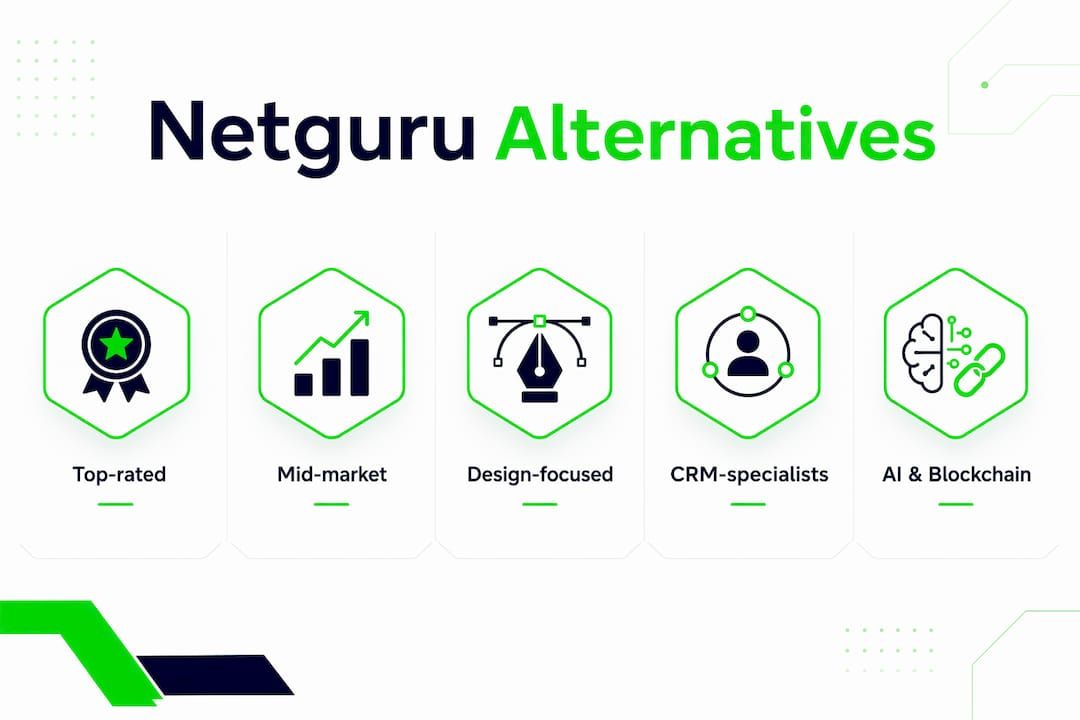
Cleveroad stands out among mid-market options because it holds ISO 9001 and ISO 27001 certifications, which matter when projects touch healthcare records or financial data. Its portfolio covers logistics systems, healthcare platforms, and fintech products, giving it a track record that pure-play startup agencies typically cannot match at the same price point.
Postlight takes a different angle. Rather than competing on engineering volume, it focuses on product strategy, UX research, and full-cycle delivery for organizations that need a thinking partner, not just a build shop. Enterprises that have struggled with misaligned vendor incentives often find this model more productive.
STX Next built its reputation on Python at scale. For teams evaluating a Python-based engineering partner, STX Next offers one of the largest dedicated Python talent pools outside of in-house hiring, which reduces the ramp-up time that typically inflates early project costs.

Yalantis and Codal both lead with design. Yalantis tends to serve product-stage companies that need UX rigor baked into the engineering process from day one. Codal’s agile delivery model suits organizations that want iterative releases rather than a long waterfall build.
TechMagic fits early-stage startups best. Its flexible staffing model lets teams scale engineers up or down without the overhead of a full consultancy retainer, which is a meaningful advantage when runway is finite.
Some firms on this list combine software development with inbound marketing and CRM integration, appealing to businesses that want unified digital growth services under one contract. SmartSites pairs web development with SEO and conversion optimization. webdew centers on HubSpot CMS and marketing automation. SmartBug positions itself as a revenue growth consultancy rather than a pure engineering shop.
For CRM-heavy projects, Rolustech and Salesforce Customer Success each bring deep platform expertise. Rolustech specializes in Salesforce and SugarCRM implementations, while Salesforce Customer Success is the natural choice for organizations already committed to the Salesforce ecosystem.
Technology Rivers is the most differentiated option for teams adopting AI or blockchain at the infrastructure level. Its focus on emerging tech stacks means it can handle greenfield architecture decisions that generalist agencies often defer to the client.
Thinner profiles like AcumenCog, Techrefic Technologies Pvt. Ltd., and The Free Website Guys serve narrower needs: small-scale custom projects, cross-platform app development, and lightweight WordPress launches, respectively. They suit buyers with modest budgets or well-scoped requirements, not enterprise programs with complex compliance demands.
How to choose the best Netguru alternative for your business
Contract flexibility, vendor support levels, and prior integration experience consistently rank as the most critical evaluation criteria beyond brand size. Choosing the wrong partner on any of these dimensions tends to surface late, when switching costs are highest.
Key selection criteria:
- Technical depth vs. breadth. A firm with deep Python or Salesforce expertise will outperform a generalist on those specific stacks, even if the generalist’s overall portfolio looks larger.
- Pricing model fit. Fixed-price contracts suit well-scoped projects. Time-and-materials or dedicated team models suit evolving requirements. Mismatching the model to the project type is one of the most common and expensive mistakes in vendor selection; understanding cost-effective software pricing can help startups and SMEs avoid such pitfalls.
- Industry and compliance experience. For healthcare, fintech, or regulated industries, ISO certifications and prior compliance work are not optional extras. Cleveroad’s ISO 27001 certification, for example, directly reduces the client’s audit burden.
- Geographic and timezone alignment. US-based or nearshore teams reduce communication friction on projects that require daily collaboration. European firms like Netguru can work well for US clients, but timezone gaps add latency to decision cycles.
- Client size and portfolio match. A firm that primarily serves seed-stage startups will struggle with enterprise-scale governance requirements, and vice versa.
Questions to ask potential partners:
- What is your process when requirements change mid-project?
- Can you share references from clients in our industry?
- How do you handle knowledge transfer at project close?
- What does your escalation path look like when delivery slips?
Red flags to watch for:
- Vague answers about team composition or subcontracting practices
- No named references willing to take a call
- Pricing that seems unusually low without a clear explanation of scope assumptions
- Proposals that skip architecture discussion and jump straight to timelines
Pro Tip: Generalist agencies like Netguru provide thorough UX/UI and process discipline but may overshoot budgets on AI-centric, rapid delivery projects that specialized boutiques handle more nimbly. If your project is primarily an AI integration or a blockchain workflow, shortlist firms whose core practice is that stack, not firms that added it as a service line.
Startups should weight MVP speed and communication quality most heavily. Scale-ups need to probe engineering scalability and the firm’s experience managing growing codebases. Enterprises should focus on governance, compliance track record, and the firm’s ability to work within existing procurement and security frameworks.
What the current market tells you about picking a digital consultancy
The industry is shifting toward AI and cloud expertise, with clients prioritizing partners who deliver speed to market through lean, AI-driven workflows rather than traditional resource-heavy models. That shift has real consequences for how you evaluate a vendor shortlist.
- Specialization is gaining ground over generalism. Boutique firms with AI-first approaches are winning projects that previously defaulted to large consultancies, particularly for greenfield builds where there is no legacy architecture to protect.
- Contract flexibility has become a primary differentiator. Rigid multi-year engagements relocate complexity into the vendor relationship. Firms offering modular, phase-gated contracts give clients more control over scope and spend.
- Regional compliance and cultural alignment still matter, but they must be balanced against pricing and scalability in the US market context. A European firm with strong process rigor may be the right fit for a compliance-heavy project, while a US-based boutique may be faster for an agile consumer product.
- Switching from a digital consultancy to a staff augmentation model entails a fundamental change in client responsibility for product ownership and project management. Teams that are not ready to own the product roadmap should not make that switch mid-project.
- Enterprise CRM and cloud modernization often require partners beyond the typical software agency profile, favoring firms with broader enterprise consulting experience rather than pure-play development shops.
The practical implication: evaluate provider flexibility and prior integration success as carefully as you evaluate brand reputation. A firm with a smaller portfolio but a track record of clean integrations in your specific stack will outperform a well-known name that has never touched your architecture.
Key Takeaways
The strongest Netguru alternatives in the US market differ most on technical specialization, pricing model, and compliance track record, not on brand size or review volume.
| Point | Details |
|---|---|
| Specialization beats generalism for focused projects | Firms with deep expertise in Python, Salesforce, or AI deliver faster and cheaper on those specific stacks. |
| Pricing model must match project type | Fixed-price suits scoped builds; time-and-materials suits evolving requirements. Mismatching inflates cost. |
| Compliance credentials reduce client risk | ISO 9001 and ISO 27001 certifications directly reduce audit burden for regulated-industry projects. |
| Contract flexibility is a primary differentiator | Phase-gated or modular contracts give teams more control over scope and spend than rigid multi-year deals. |
| Bitecode offers a modular alternative | For teams needing rapid custom software with up to 60% pre-built components, Bitecode is a faster path than a traditional agency engagement. |
The case for rethinking what “alternative” actually means
The conventional framing of this decision treats every Netguru alternative as a like-for-like swap: same model, different logo. That framing misses the more interesting question, which is whether the traditional agency model itself is the right starting point for your project.
Most of the firms on this list operate on a greenfield build model. They start from scratch, accumulate boilerplate, and bill for the hours it takes to get to a working system. That model made sense when custom software was genuinely custom at every layer. It makes less sense now, when large portions of any enterprise system, authentication, workflow orchestration, financial processing, API scaffolding, can be assembled from proven components rather than written from scratch.
The firms that are winning in 2026 are the ones that have internalized this. They accelerate work without accelerating chaos by separating the commodity layers of a system from the genuinely novel business-domain complexity. The commodity layers get handled with pre-built modules or established frameworks. The novel layers get the engineering attention they actually deserve.
When you evaluate any firm on this list, the right question is not “how many engineers do they have?” It is “how much of my project is genuinely novel, and how does this firm handle the rest?” A firm that treats every layer as greenfield is putting unnecessary risk into your timeline and your budget.
Bitecode offers a faster path to custom enterprise software
If the firms above represent the traditional agency route, Bitecode represents a different architecture for the same goal. Rather than starting every project from a blank file, Bitecode’s platform begins with up to 60% of the baseline system already built, covering AI automation, financial processing, blockchain integration, and workflow orchestration as modular components that teams configure rather than construct.
For medium to large organizations that need secure, scalable systems without a 12-month build cycle, that head start changes the economics of the project. The custom software development platform handles the commodity layers so your engineering attention stays on the business logic that actually differentiates your product. Bitecode also offers AI business process automation for teams that need to wire AI into existing workflows without rebuilding the surrounding system from scratch. If your priority is speed, cost control, and a modular foundation you can extend over time, Bitecode is worth a direct conversation before you commit to a traditional agency engagement.