A double entry ledger records every business transaction twice: once as a debit, once as a credit, in at least two different accounts. This structure gives bookkeeping a built-in check, since total debits must always equal total credits, which helps catch errors before they turn into bigger problems. Whether maintained by hand or inside modern accounting software, this principle is what keeps a set of books audit-ready.
TL;DR:
- Accurate recordkeeping requires maintaining source documents linked to each ledger entry to ensure traceability during audits.
- Keeping full, uncondensed backups is essential for preserving transaction-level detail that auditors may request.
- Regular monthly reconciliation of bank and credit card accounts helps identify errors like transposition, omissions, or duplicate postings early.
- Append-only ledgers enhance tamper resistance but demand disciplined correction practices through reversing entries, not edits.
- Consistent posting, reconciliation, and backup habits prevent errors from escalating into larger discrepancies and support audit readiness.
Accounts and the debit and credit rules you need to know
Every transaction in a double entry ledger touches at least two accounts, and each account belongs to one of five categories: assets, liabilities, equity, revenue, and expenses. Assets are what a business owns, liabilities are what it owes, and equity represents the owner’s stake once liabilities are subtracted from assets. Revenue and expenses track the inflows and outflows that eventually roll into equity.
Each account type has a normal balance, meaning the side (debit or credit) where increases are recorded:
- Assets and expenses increase with debits and decrease with credits.
- Liabilities, equity, and revenue increase with credits and decrease with debits.
- Contra accounts, like accumulated depreciation, run opposite to their parent category on purpose.
These rules exist to protect a single mathematical identity: Assets = Liabilities + Equity. Every recorded transaction has to preserve that balance, which is why a debit on one side of an entry always needs a matching credit somewhere else. Publication 583 walks through this self-balancing structure and contrasts it with single-entry bookkeeping, where only one side of a transaction gets recorded and errors are much harder to catch.
Recording a transaction: from journal entry to ledger
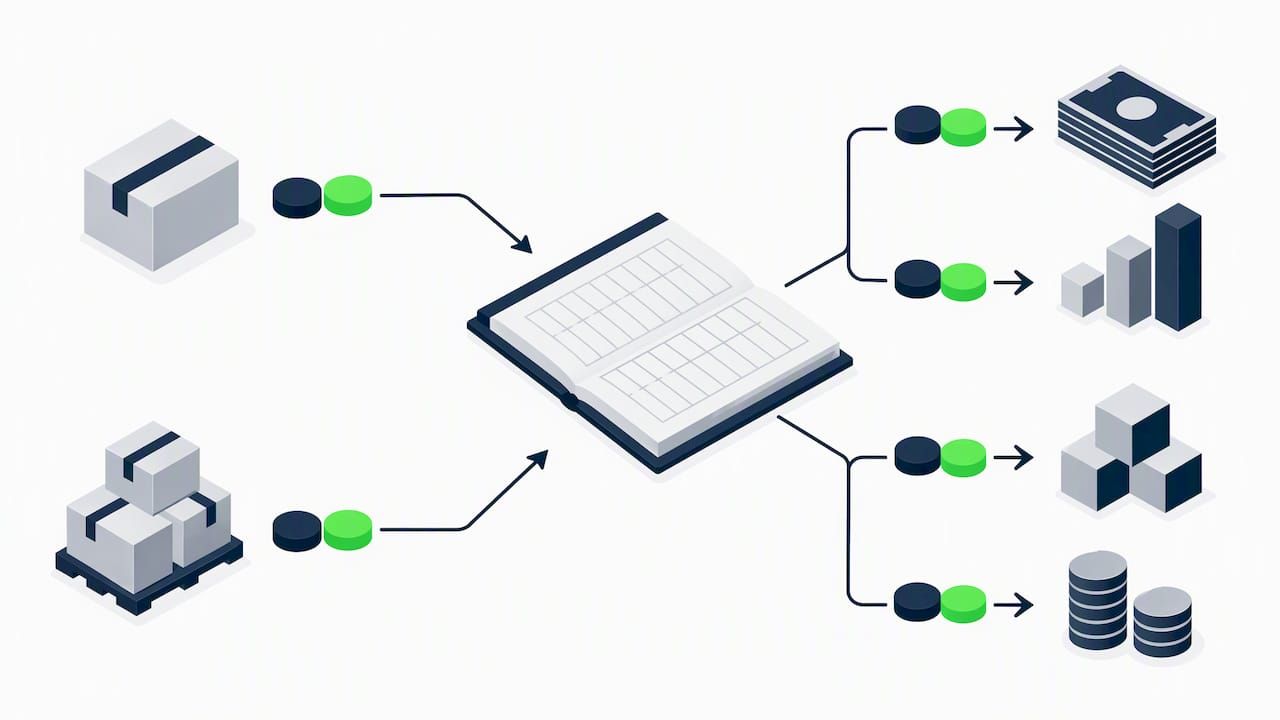
Before any transaction reaches the ledger, it gets recorded in a general journal, a chronological log that captures the date, the accounts involved, and the dollar amounts. Journals exist because they preserve the order and context of events, something a ledger organized by account cannot show on its own. From there, the information gets posted, meaning copied, into the general ledger and, when needed, into subsidiary ledgers that track detail for a single customer, vendor, or asset category.
The posting process generally follows these steps:
- Identify the accounts affected and determine whether each should be debited or credited.
- Record the transaction in the general journal with equal total debits and credits.
- Post each journal line to the corresponding account in the general ledger.
- Update any relevant subsidiary ledger, such as accounts receivable for a specific customer.
- Calculate the new running balance for each account touched.
Here is how that looks with real numbers. Say a business makes a $500 cash sale. The journal entry debits Cash for $500 and credits Sales Revenue for $500. Now say the same business purchases $200 of supplies on account, meaning it will pay later. That entry debits Supplies for $200 and credits Accounts Payable for $200. In both cases, one transaction changes two accounts, and the books stay balanced because the debit total and credit total always match.
This is the mechanical heart of double entry bookkeeping: no transaction exists in isolation. A sale increases cash and increases revenue at the same time; a purchase on credit increases what you own and increases what you owe. Multiply this across thousands of transactions and the ledger becomes a complete, traceable financial history rather than a loose collection of numbers.
Trial balance and how to catch errors before they spread
A trial balance is a list of every account in the ledger along with its ending debit or credit balance, prepared to confirm that total debits equal total credits across the whole book. If the two totals match, it does not guarantee the books are correct, but it rules out a specific category of mistakes. If they do not match, something was recorded incorrectly, and the trial balance is the first place to look.
Common errors that break a trial balance include:
- Transposition errors, where digits get swapped, such as entering $540 instead of $450.
- Omitted entries, where a transaction never made it into the journal at all.
- Wrong-side postings, where an amount lands in the debit column instead of the credit column, or vice versa.
- Duplicate postings, where the same transaction gets recorded twice.
When a trial balance does not balance, trace the discrepancy by checking recent postings first, then working backward through the journal. A suspense account can temporarily hold the difference while you investigate, and a reversing entry can correct a mistake cleanly by undoing the original posting before recording the fix. This keeps the audit trail intact instead of quietly erasing the error.
Pro Tip: Reconcile bank and credit card statements against the ledger every month, before closing the books, so transposition and omission errors surface while the source documents are still easy to track down.
Why audit-ready records depend on more than a balanced ledger
A balanced trial balance proves the math works, but it does not prove the records will survive an audit. The IRS FAQs on electronic accounting software records state that businesses must retain machine-sensible backup files, and that condensed or summarized data is not acceptable for tax years under examination. Examiners may request the original software backup file rather than an exported spreadsheet, because a backup preserves the transaction-level detail needed to test internal controls.
That detail matters because an examiner is not just checking final balances. They may want to see which source document supports a specific journal entry, who recorded it, and when. The IRS guidance on recordkeeping lists journals, ledgers, and organized supporting documents like invoices and receipts as the backbone of a defensible recordkeeping system.
Practical steps that hold up under scrutiny:
- Create a full archive backup before using any “condense” or “purge” feature in accounting software.
- Tie every ledger entry back to its source document, whether that is an invoice, receipt, or bank statement.
- Document reconciliations as you complete them, rather than reconstructing them later.
A full transaction-level backup, not a condensed export, is what examiners may request to test internal controls, according to IRS guidance on electronic records. Keeping that backup intact is often the difference between a quick audit and a slow one.
Append-only and immutable ledgers: the modern extension of double entry
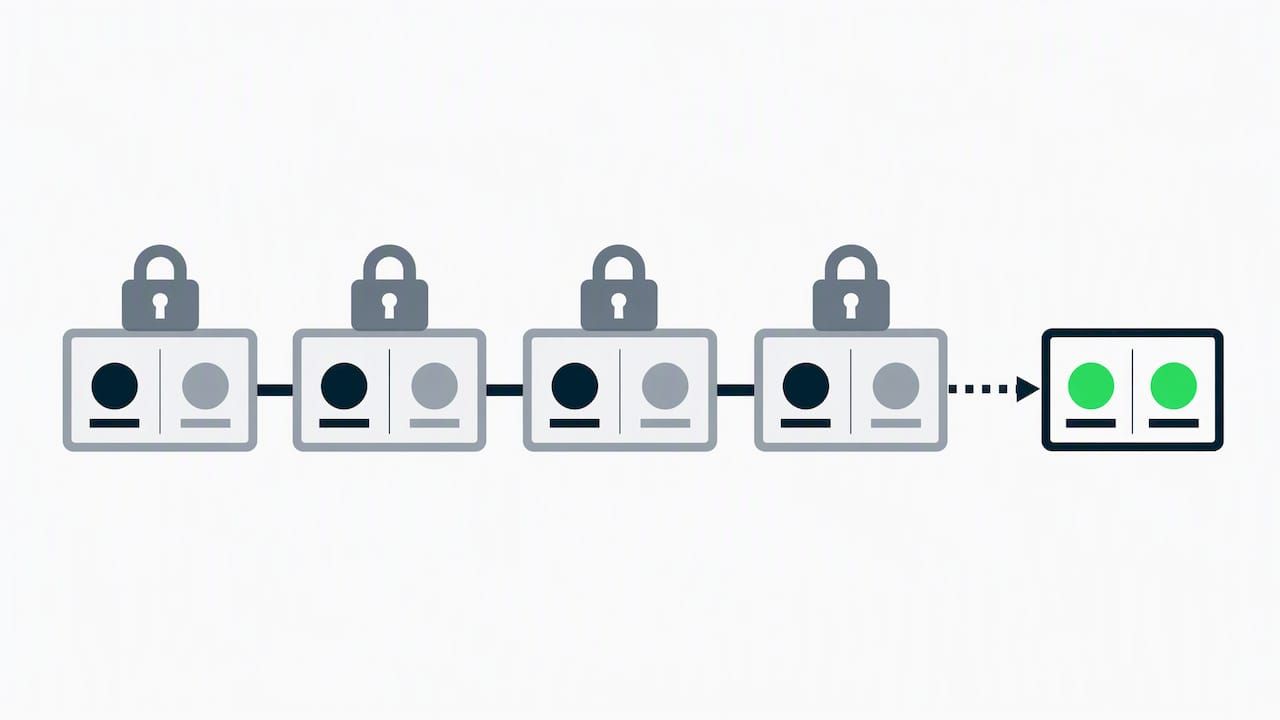
An append-only ledger only allows new entries to be added, never edited or deleted, which makes it functionally immutable once a record is written. This differs from a traditional editable ledger, where a bookkeeper can correct a mistaken entry directly. In an append-only system, correcting a mistake means adding a new reversing entry rather than touching the original record.
The tradeoffs run in both directions:
- Append-only systems produce a stronger, tamper-evident audit trail because nothing in the history can be quietly altered.
- They require more disciplined operational habits, since every correction becomes a new transaction rather than an edit.
- Explicit versioning and clear reversing-entry conventions become necessary to keep the ledger readable over time.
This is the same double entry logic that has existed for centuries, just enforced at the system level instead of relying on a bookkeeper’s discipline. For readers curious about the technical side of this shift, our piece on hybrid anchoring and modular audit trails covers how traceability can be preserved without storing every record on-chain.
Quick checklist: avoid these common bookkeeping mistakes
Good ledger hygiene comes down to a short list of habits repeated consistently.
- Post transactions regularly rather than batching weeks of entries at once.
- Reconcile bank and credit card accounts monthly, not just at year-end.
- Keep source documents organized and linked to their corresponding entries.
- Archive a full backup before condensing or purging old data.
- Use reversing entries to correct mistakes instead of deleting the original record.
A short month-end checklist built around these five habits catches most recurring errors before they compound into larger discrepancies.
Our take on ledger integrity and the technology behind it
A ledger is only as trustworthy as the trail behind it. Balanced books matter, but so does being able to show which document, timestamp, and process produced each entry, especially once automation starts touching the books. Audit-ready patterns can be embedded into financial systems using modular components and hybrid anchoring approaches that preserve traceability without bloating storage. Reliable automation starts with a ledger structure that was designed to be checked, not just trusted.
— Bitecode
How we help build audit-ready ledger systems
Custom financial systems can be built around the same principle this entire guide is based on: a ledger is only useful if it can be trusted and verified. Our Financial Module handles accounting, audit trails, and subscription logic as part of a larger system, while our automation workflows can handle recurring posting and reconciliation tasks without sacrificing traceability.

What this looks like in practice:
- Transaction-level records tied directly to source documents, built for audit review.
- Backup and archiving patterns that keep historical data intact before any condensing happens.
- Financial and automation components may integrate with existing systems instead of replacing them wholesale.
If you need a ledger system built around your own workflow rather than a generic template, start a project with us and we will scope it around what your books actually need.
FAQ
What is an example of double-entry accounting?
A $500 cash sale is recorded as a debit to Cash for $500 and a credit to Sales Revenue for $500, since one transaction affects two accounts at once. This structure is illustrated in Publication 583 through a sample general journal entry showing matching debits and credits.
What are the three golden rules of double-entry bookkeeping?
The commonly taught rules are: debit what comes in and credit what goes out for asset accounts, debit the receiver and credit the giver for personal accounts, and debit expenses and losses while crediting income and gains for nominal accounts. These rules are a teaching shorthand for the broader debit and credit framework rather than a strict legal standard.
Can you explain double-entry bookkeeping to a beginner?
Double-entry bookkeeping means every transaction gets recorded twice, as a debit in one account and a credit in another, so the books stay balanced at all times. This structure helps catch errors early, since total debits must always equal total credits across the entire ledger.
Is double-entry bookkeeping still used today?
Yes, double-entry bookkeeping remains the standard method used by accounting software and professional bookkeepers because it preserves the accounting equation and supports reliable financial statements. Modern tools, including append-only and immutable ledger systems, still follow the same underlying debit and credit logic, just enforced through software rather than manual entry.