Automating code review and reducing manual pull request workload remains difficult for engineering teams managing complex or distributed codebases. Most solutions limit context to single files or simple linter rules, making it hard to catch cross-file bugs or enforce custom team policies without heavy manual oversight. This article breaks down code review automation platforms on PR analysis depth, workflow integrations, and pricing so you can choose the one that fits your team’s scale and compliance needs.
Bitecode
At a Glance
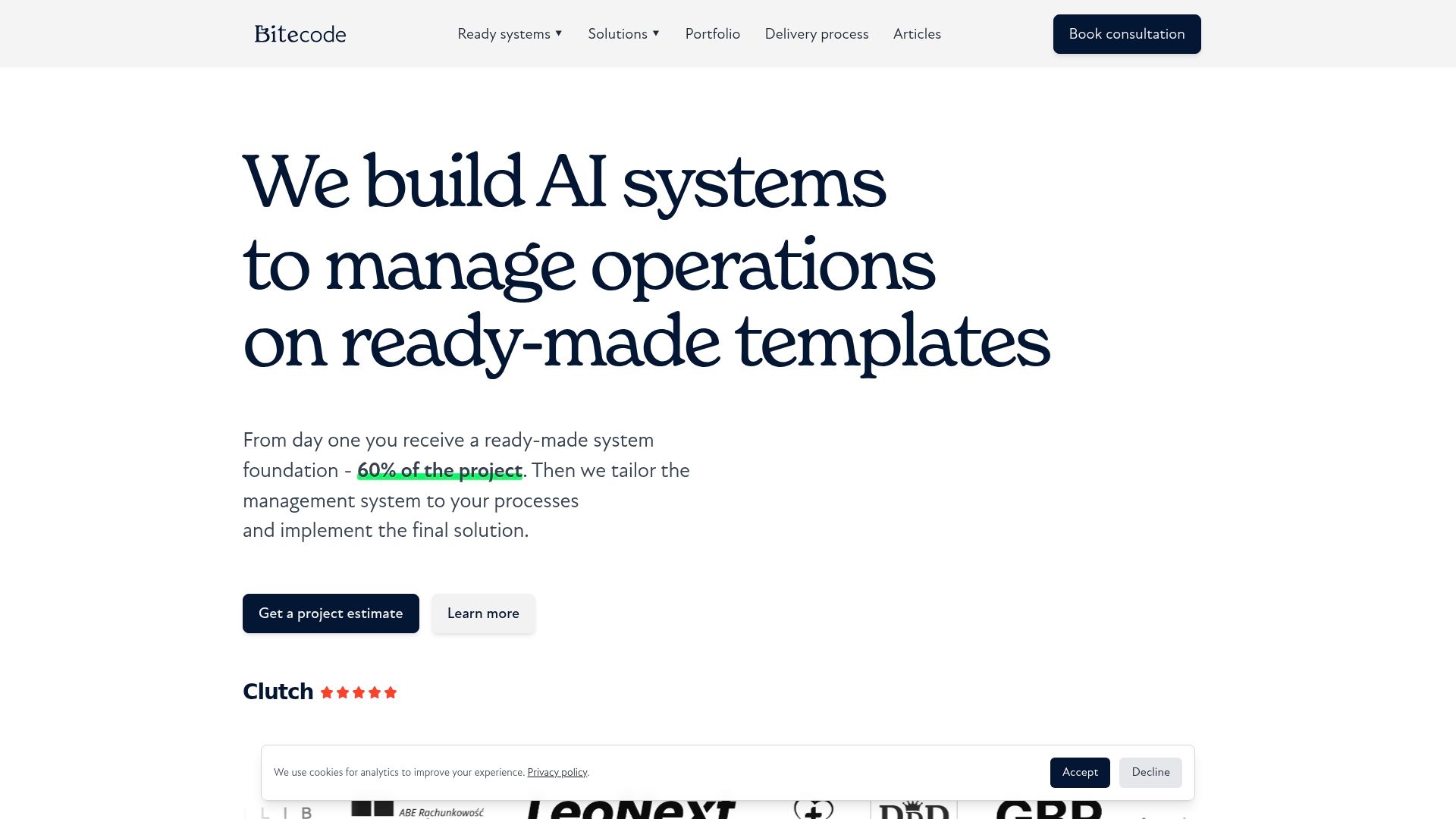
The vendor advertises the ability to start projects with up to 60% of the baseline system pre-built, using modular templates and open source foundations to compress delivery timelines.
Bitecode focuses on rapid assembly of business systems that combine AI automation, financial processing, blockchain integration, and workflow automation for medium to large organizations.
Core Features
- Ready-made templates covering sales, finance, marketing, and customer support that reduce initial design work.
- AI-enabled document processing for routing, classification, and automated responses across operational workflows.
- Distributed cloud architecture designed to scale for high traffic and complex business logic.
- Custom software development built from proven templates and open source components for quicker customization.
Key Differentiator
Bitecode pairs a template-first approach with deep customization and AI integration so teams can deploy tailored, scalable systems faster than starting from scratch. That combination targets enterprise workflows that require both speed and specialized logic.
Pros
- Fast delivery using ready-made modules shortens pilot phases. You can get a working baseline quickly and iterate on business rules instead of rebuilding plumbing.
- Highly customizable solutions let teams preserve existing processes and data models rather than forcing a new operating model.
- Strong AI expertise supports automation beyond simple rules, including document intelligence and operational routing for routine decisions.
- Open source foundation OpenKnit provides transparency and a fallback if you want to fork templates or run components in-house.
- Experience across finance, loyalty, booking, and support projects makes integration planning more predictable on repeat engagements.
Cons
- Complex projects require disciplined scoping and active project management; customization and automation can expand timelines and budget without clear boundaries.
Who It’s For
Business executives and IT managers who need tailored automation and AI that integrate with existing systems and processes. Best when you have internal product owners and IT resources to collaborate on scope, data mapping, and change control.
Unique Value Proposition
The open source foundation OpenKnit gives you code-level access to templates and modules, so you can both accept fast, template-led delivery and take ownership of the stack later. That model reduces vendor lock while preserving rapid assembly of core functionality.
Real World Use Case
A medical clinic can deploy a patient service portal that ties intake forms to AI triage rules and scheduling, reducing front desk load and speeding patient routing. A financial firm can automate transaction settlements and generate reconciliation reports with fewer manual handoffs.
Pricing
Pricing is not specified and is likely project-based. Expect consultative bids that quote design, customization, deployment, and ongoing maintenance separately rather than a fixed per-seat plan.
Website: https://bitecode.tech
CodeRabbit
At a Glance
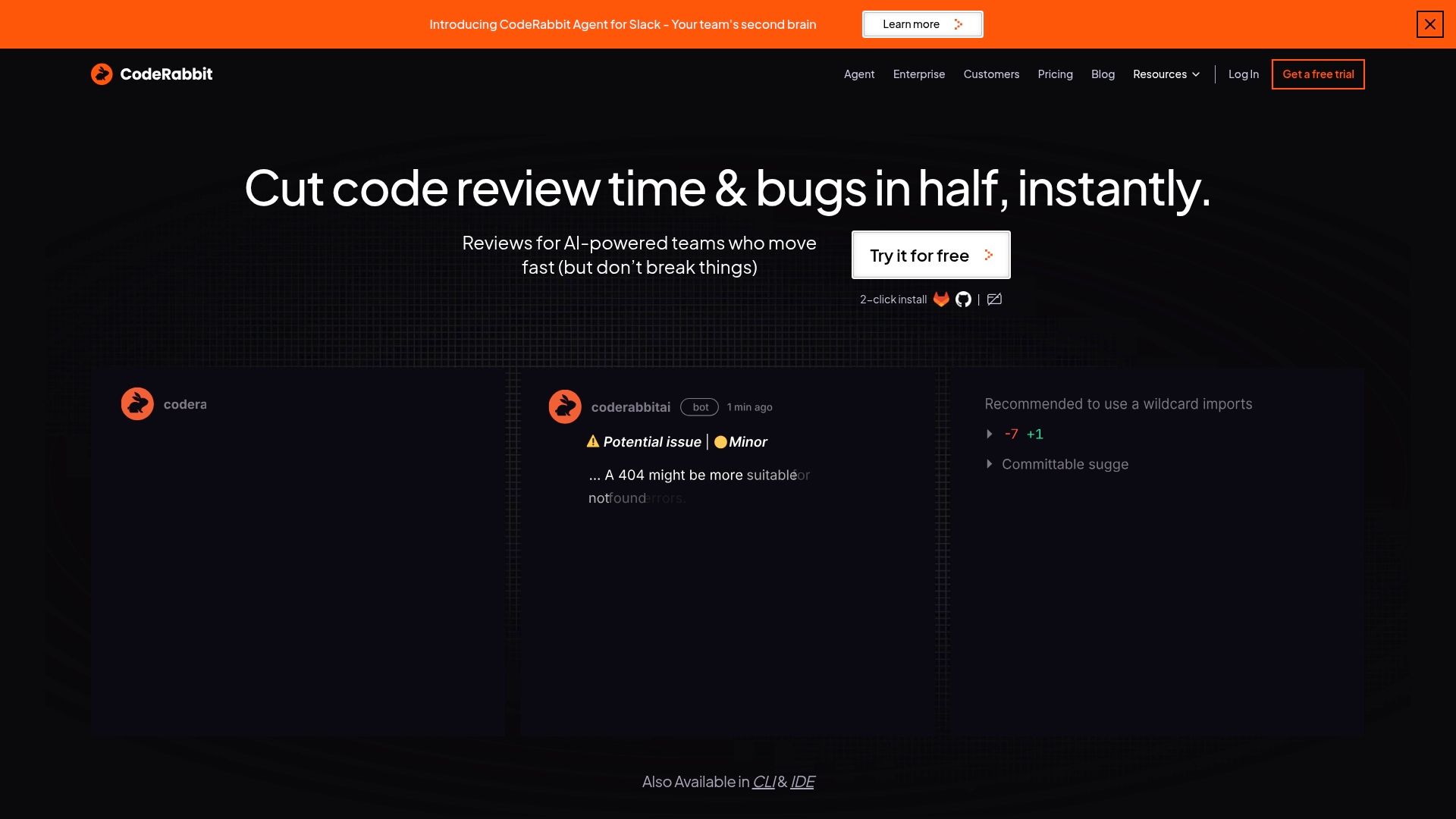
The vendor offers a free tier for open-source projects and a 14-day free trial on paid plans, which makes an initial evaluation low friction for contributors and maintainers.
CodeRabbit targets pull request review and static checks with AI assistance to reduce manual review time across distributed teams.
Core Features
CodeRabbit delivers AI-powered code reviews that attempt context-aware feedback by analyzing PR diffs, repository history, and dependency graphs.
It supports GitHub and GitLab, connects to IDEs such as VS Code, and exposes CLI tools for CI. Automated bug detection, static analysis, security scans, and YAML-configurable review guidelines round out the feature set.
Key Differentiator
CodeRabbit emphasizes repository-wide analysis using a CodeGraph approach to understand cross-file dependencies and legacy code interactions.
That full-repo analysis is its primary angle and aims to surface issues that line-by-line linters miss while keeping feedback tied to the pull request context.
Pros
-
Automates routine review tasks so reviewers focus on architecture and design rather than style nitpicks. Review cycles often shorten as a result.
-
Integrates with mainstream developer workflows. GitHub Actions, GitLab CI, VS Code extensions, and CLI hooks let you run checks where your team already works.
-
Provides detailed summaries and context-rich comments that include suggested fixes, not just problem statements. That helps junior engineers act on feedback faster.
-
The vendor claims recognition for deep analysis of complex codebases, which explains why some large teams adopt it for legacy refactors.
-
Offers a free tier for open-source projects and trials for paid plans, easing procurement and pilot runs.
Cons
-
Third-party reviews indicate inconsistent customer support and occasional billing problems, which has led to polarized user sentiment.
-
Some teams report that AI feedback is noisy or less relevant for niche language patterns and custom frameworks.
-
Pay-per-use or usage-based components can make monthly costs unpredictable at scale unless you model consumption carefully.
When It May Not Fit
If your codebase relies on unusual language dialects or heavily opinionated style rules, the AI feedback may require significant tuning before it becomes useful.
Teams with zero tolerance for variable monthly spend should budget for usage spikes or opt for an Enterprise quote with fixed terms.
Notable Integrations
-
GitHub and GitLab for pull request hooks and repository access.
-
VS Code extension for in-editor review comments and quick remediation suggestions.
-
CLI tools that run checks in CI pipelines or locally before pushing changes.
Who It’s For
Engineering managers and development teams that want to push some review work to automation while keeping human reviewers focused on system design and difficult code paths.
It fits distributed teams, organizations working across multiple repositories, and projects where catching cross-file bugs matters.
Real World Use Case
A global engineering organization used CodeRabbit to standardize pre-merge checks across 30 teams. The repository analysis flagged dependency misuse and duplicated logic that had slipped past linters, accelerating safe merges and reducing rollback frequency.
Pricing
All plans include a 14-day free trial. Paid tiers start at $24 per user per month for the Pro plan with monthly or annual billing and Enterprise pricing available by quote. Open-source projects can apply for the free tier.
Website: https://coderabbit.ai
Greptile
At a Glance
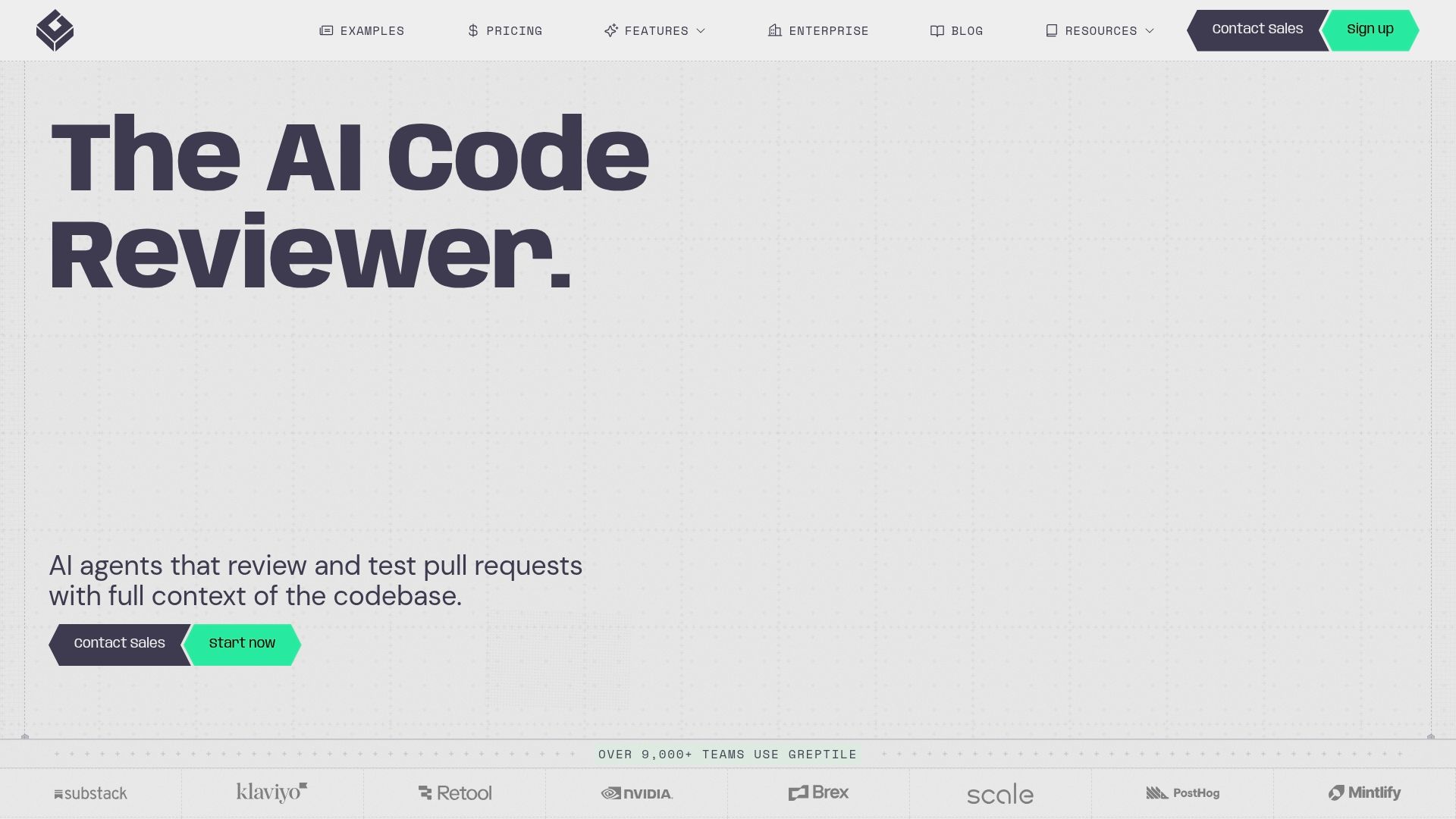
The vendor reports more than 9,000 teams use Greptile to automate pull request checks and catch issues before merge. It offers both cloud and self-hosted deployment paths and advertises support for SOC 2, HIPAA, and GDPR controls for enterprise needs.
Core Features
Greptile builds a graph index of the entire codebase to reason about relationships across files and modules. An agent swarm runs automated reviews on each pull request, surfacing style violations, security risks, and logical bugs across multiple languages.
Custom rules are written in plain English and Greptile learns team standards from historical PR comments and ongoing feedback. Integrations include IDE hooks, Slack notifications, API access, and GitHub or GitLab workflows.
Key Differentiator
Greptile’s distinguishing mechanism is its combination of a full codebase graph with parallel agent review. That architecture lets the system flag cross-file logic errors that line-by-line linters miss and propose fixes informed by the code graph.
The agent swarm model also enables concurrent checks tuned to different concerns: style, security, and functional intent, which is different from single-pass static analyzers.
Pros
-
Advanced detection across repositories. The graph plus agent approach finds cross-file logical issues that typical linters and CI jobs often miss, reducing late-stage regressions.
-
Custom rule enforcement lets teams encode conventions in plain English, shortening the feedback loop between reviewers and engineers.
-
Enterprise posture. Built-in compliance support and a self-hosting option make Greptile workable for regulated industries that must keep code and reviews on private infrastructure.
-
Continuous learning from PR history means the tool adapts to your team voice over time rather than insisting on one rigid rule set.
Cons
-
Independent, third-party evaluations appear limited. The product data mentions a sizable user base but external reviews and benchmarks are sparse, which increases vendor reliance when validating claims.
-
Complexity at small scale. The graph indexing and agent orchestration are oriented toward large repositories and multiple repos, which may add setup and maintenance overhead for single-repo teams.
-
Potential false positives. Any AI-driven review system that generalizes from history will surface some noisy suggestions; expect an initial tuning period to dial precision.
Who It’s For
Large engineering organizations, platform teams, and security-conscious enterprises that run many repositories and need scalable, policy-driven PR gating. Greptile suits teams willing to invest in initial configuration to reduce manual review load over time.
Real World Use Case
A CTO at a financial services firm integrated Greptile across dozens of repos to enforce security rules and reduce reviewer toil. According to the company, the deployment lowered manual review time and helped maintain compliance across regulated services.
Pricing
Typical pricing starts at $30 per seat per month, with per-review charges reported around $1 each and discounts for open source projects or startups. Enterprise plans and self-hosted options are priced via vendor negotiation.
Website: https://greptile.com
Comparative Analysis
Business System Automation Platforms Comparison
Discover which business system platform combines rapid assembly with tailored customization to meet diverse organizational needs.
| Platform | Core Feature | Key Differentiator | Best For | Pricing | Notable Limitation |
|---|---|---|---|---|---|
| Bitecode | AI automation and workflow integration | Modular templates with open source foundations | Medium to large organizations | Not disclosed | Requires clear scoping for complex projects |
| CodeRabbit | AI-assisted pull request reviews | Repository-wide analysis using CodeGraph | Distributed development teams | Starting at $24/user/month | Inconsistent customer support reliability |
| Greptile | Agent-based multi-aspect PR reviews | Full codebase graph indexing | Large, security-conscious enterprises | Starts at $30/seat/month | High setup complexity for smaller teams |
Choose Bitecode for Faster, Customized Business Software Solutions
Facing challenges in rapidly building complex enterprise systems with AI automation and blockchain elements can slow down your digital goals. The article comparing thetop alternatives to Bitecode highlights frustration with long development cycles and limited customization options. Bitecode offers a solution by providing up to 60% of your baseline system pre-built through modular templates designed for medium to large organizations aiming for tailored workflows and financial automation.
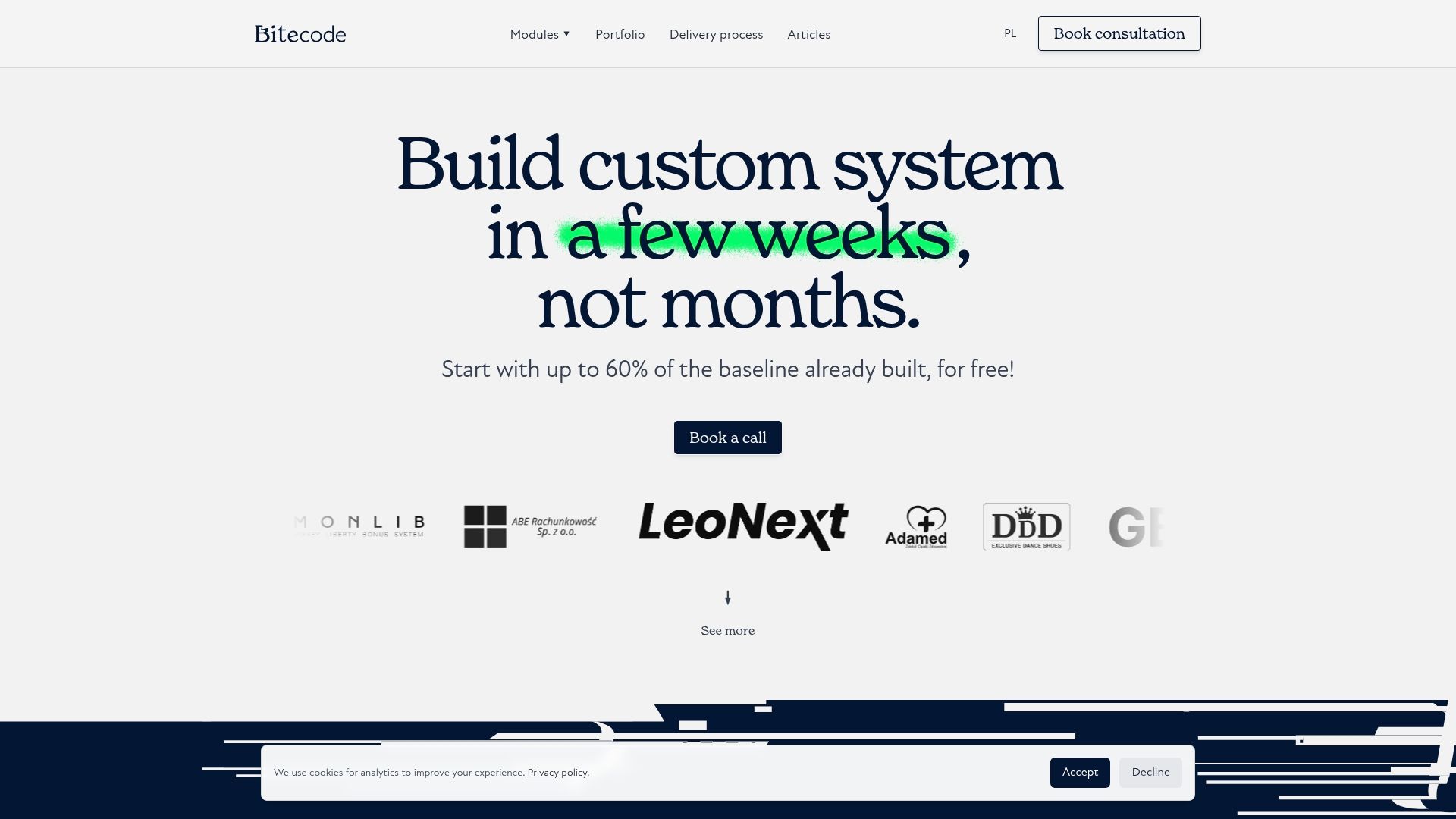
Accelerate your project delivery without sacrificing flexibility. Explore how Bitecode.tech lets you quickly deploy custom software with ready-made components and AI integrations. Visit Bitecode.tech to learn more and get started. Experience rapid system setup that adapts to your business needs rather than forcing you to fit into rigid, generic platforms.
Frequently Asked Questions
What features make Bitecode suitable for large organizations?
Bitecode excels in providing template-based solutions that can start with up to 60% of the baseline system pre-built. It focuses on integrating AI automation, financial processing, blockchain, and workflow automation, making it particularly fit for medium to large organizations. Businesses looking to streamline their processes can find considerable value in Bitecode’s offerings.
How does CodeRabbit compare to Bitecode for pull request reviews?
CodeRabbit provides AI-assisted code reviews with a strong emphasis on repository-wide analysis, which addresses cross-file dependencies effectively. While Bitecode is designed for building business systems with rapid assembly and AI integration, CodeRabbit shines in environments needing detailed feedback on pull request diffs and static checks. Teams focusing on code review may prefer CodeRabbit’s specialized features.
What is the pricing model for Bitecode?
Bitecode utilizes a project-based pricing model that is likely to quote design, customization, deployment, and ongoing maintenance separately. Organizations planning to adopt Bitecode should prepare for consultative bids rather than fixed per-seat plans, allowing tailoring to specific project needs.
Can I customize Bitecode to fit my existing workflows?
Bitecode allows teams to create highly customizable solutions that preserve existing processes and data models. Utilizing ready-made templates and AI integration, users can adapt Bitecode to meet their specific operational requirements, making it an appealing choice for organizations with established workflows.
What is the main advantage of Bitecode’s open-source foundation?
Bitecode’s open-source foundation, OpenKnit, provides users with code-level access to templates and modules, allowing them flexibility to modify components as needed. This transparency reduces the risk of vendor lock-in while maintaining rapid development, making it ideal for organizations that value ownership and adaptability in their technology stack.